From FLIGBY to Smart Entertainment: How One Leadership Simulation Inspired a New Learning Paradigm
It Started with a Question
More than fifteen years ago, we set out to answer a question that seemed both simple and ambitious: Can an interactive story become a meaningful tool for developing leadership skills?
At the time, most digital learning solutions relied on quizzes, predefined scenarios, or gamified exercises that often failed to capture the complexity of real managerial decisions. We believed there was another way, one that combined the emotional engagement of storytelling with the educational power of experiential learning.
Working closely with Professor Mihaly Csikszentmihalyi, the father of Flow theory, we developed FLIGBY (Flow Is Good Business for You), an immersive, story-driven leadership simulation grounded in authentic workplace situations. Rather than asking participants to describe how they would behave, FLIGBY places them in the role of a newly appointed general manager, where every decision affects colleagues, business outcomes, and the organization’s overall success.
The objective was never to create just another assessment tool. Our goal was to create an experience engaging enough that participants would temporarily forget they were being observed. In this state of deep immersion, their decisions would reflect genuine leadership instincts rather than carefully considered “correct” answers.
The result was a unique blend of an engaging story, experiential learning, behavioral analytics, and personalized feedback. Every decision made throughout the simulation contributed to a rich behavioral profile, providing participants with actionable insights into 29 leadership and management competencies.
At the time, we simply called it FLIGBY. We did not realize we were laying the foundation for something much bigger. Looking back today, many of the principles that define what we now call Smart Entertainment were already present: engaging entertainment, authentic human behavior, meaningful behavioral data, and personalized development generated without disrupting the immersive experience.
FLIGBY was not originally designed to launch a new category. Yet it became the first proof that interactive experiences could do far more than entertain. They could help people better understand themselves and become more effective leaders.
FLIGBY Proved That Entertainment Generates Authentic Data on Human Behavior
As FLIGBY was introduced to universities, business schools, corporations, and executive development programs around the world, we gained something even more valuable than positive user feedback: evidence.
Tens of thousands of participants completed the simulation, making hundreds of decisions in realistic managerial conditions. Although every player experienced the same story, no two journeys were identical. Different leadership styles, communication patterns, priorities, and decision-making strategies emerged naturally from the choices participants made. This revealed one of FLIGBY’s most important discoveries: People behave differently when immersed in a compelling story than when answering questions about themselves.
Traditional personality questionnaires and self-assessments rely on introspection. They ask participants to evaluate their own behavior, often outside the context in which those behaviors occur. Even well-designed psychometric instruments measure what people believe about themselves—or what they aspire to be. FLIGBY approached the problem from a fundamentally different direction. Instead of asking “What kind of leader are you?”, it observed how participants actually behaved while managing conflicts, motivating employees, balancing business objectives, handling uncertainty, or responding to unexpected events. Every decision became a behavioral data point within a realistic managerial context.
This distinction proved crucial. Engagement was not merely a way to make learning more enjoyable; it became the mechanism that enabled more authentic observation. The immersive narrative reduced the artificiality often associated with traditional assessments, allowing participants to respond instinctively rather than strategically. The story itself became a natural environment for observing behavior. Over time, it became increasingly clear that the true innovation behind FLIGBY was not simply the leadership simulation or the detailed competency reports. It was the realization that high-quality entertainment experiences can generate meaningful behavioral data without interrupting the experience. This insight extended far beyond leadership development.
If authentic behavior can emerge from an engaging, interactive story and if that behavior can be translated into meaningful developmental feedback, then the same principle could be applied in many other contexts. Leadership was simply the first domain we explored this possibility.
That realization prompted a much larger question, one that would eventually lead to the concept of Smart Entertainment. What if the underlying principles that made FLIGBY so effective were not unique to leadership simulations? What if any carefully designed interactive entertainment experience could serve as a gateway to personalized learning and development while remaining, first and foremost, entertainment?
A Bigger Question Emerged
The success of FLIGBY demonstrated that immersive storytelling, meaningful decision-making, and behavioral analytics could create a powerful learning experience. But it also raised a more ambitious question: Was this approach limited to professional simulations, or had we uncovered a universal principle?
FLIGBY was designed specifically for leadership development. Its story, characters, and dilemmas were carefully crafted to assess managerial competencies and provide personalized feedback. Yet, from a technological and behavioral perspective, there was nothing inherently unique about leadership. What mattered was not the subject matter; it was the quality of the engagement.
The more we analyzed player behavior, the more we realized that authentic decision-making is not limited to educational simulations. People reveal their preferences, values, judgment, and decision-making patterns whenever they become genuinely immersed in an interactive experience. Whether the setting is a vineyard, a detective story, a science fiction adventure, or an interactive movie, meaningful choices can yield meaningful behavioral data. This shifted our perspective dramatically.
Perhaps FLIGBY was not just an innovative leadership simulation. Perhaps it marked the first implementation of a much broader concept, in which entertainment itself becomes the starting point for personal development. This idea challenged a long-standing assumption in digital learning. Traditionally, educational technologies begin with a learning objective and then attempt to make it engaging. Smart Entertainment turns this logic upside down. It begins with an experience people genuinely want to engage with. Learning does not replace or interrupt entertainment; instead, it emerges from the authentic behaviors that entertainment naturally produces.
This realization marked the birth of what we now call Smart Entertainment, an open ecosystem that transforms authentic engagement with entertainment into meaningful opportunities for personal growth without ever compromising the entertainment experience.
From One Simulation to an Entire Ecosystem
Once the concept of Smart Entertainment began to take shape, the next challenge was clear: could the principles pioneered by FLIGBY be applied beyond the world of professional leadership simulations?
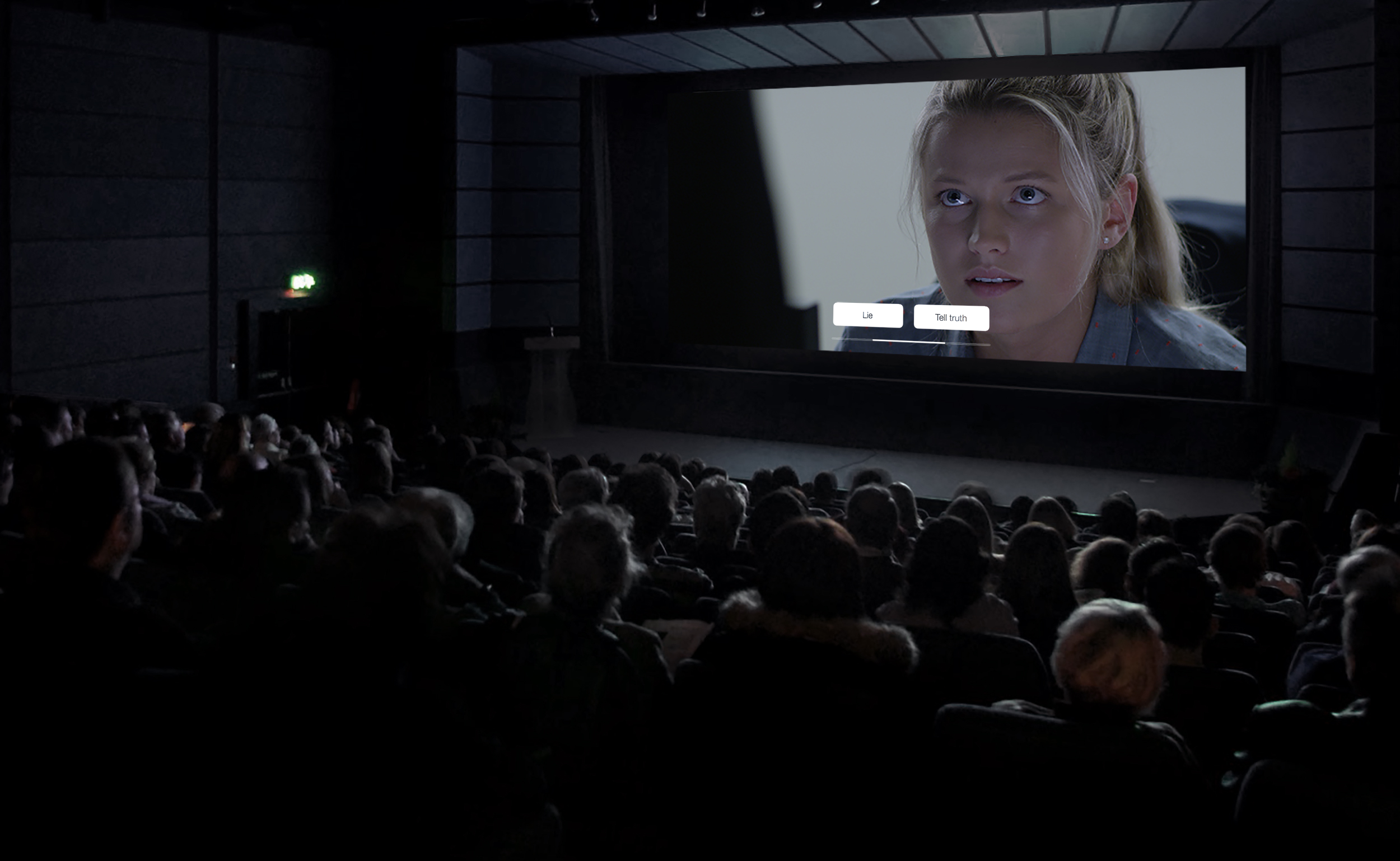
Answering this question emerged from our collaboration with CtrlMovie, the creators of the award-winning interactive movie Late Shift. Late Shift was never intended as a learning product. It is a commercially successful interactive crime thriller in which viewers influence the storyline through a series of time-sensitive decisions. Unlike traditional business simulations, the choices are simple and intuitive, allowing the narrative to flow naturally without interrupting the cinematic experience. Yet beneath this simplicity lies exactly what Smart Entertainment requires: authentic human decisions made under realistic emotional pressure.
Working with CtrlMovie, we added behavioral analytics and personalized feedback to the interactive movie without altering its storytelling, pacing, or artistic integrity. Viewers still experienced Late Shift exactly as its creators intended, as an engaging piece of entertainment. The developmental layer became visible only after the movie ended, when participants received personalized insights based on behavioral patterns reflected in their decisions. This marked a major milestone.
For the first time, the principles originally validated by FLIGBY were successfully applied to a commercial entertainment product. The underlying methodology no longer relied on a leadership simulation or an explicitly educational environment. It showed that meaningful behavioral insights could emerge from authentic engagement with mainstream entertainment. In many ways, FLIGBY provided the scientific and technological foundation, while Late Shift demonstrated the concept’s scalability. Together, they showed that Smart Entertainment is not a single product or a single methodology. It is a framework that can connect very different forms of interactive content through a common architecture: immersive experiences generate authentic behavior, behavioral analytics transform that behavior into meaningful data, and personalized feedback turns that data into opportunities for growth.
Why Smart Entertainment Matters
Smart Entertainment builds on a simple yet powerful insight: when people are fully engaged, they reveal authentic behaviors. Those behaviors can form the foundation for meaningful, personalized development without interrupting or diminishing the entertainment experience. This creates value far beyond individual learning:
- For organizations, Smart Entertainment offers a new way to develop skills, strengthen collaboration, identify talent, and deliver personalized feedback at scale. Rather than relying solely on self-assessments or standardized training programs, organizations can observe how people make decisions in realistic, emotionally engaging situations.
- For entertainment creators, it opens an entirely new dimension of value. Interactive movies and narrative games no longer need to end when the credits roll. They can become the starting point for a personalized developmental journey, fostering deeper, more lasting relationships with audiences while preserving the original work’s creative vision.
- For educators and coaches, Smart Entertainment offers a new source of behavioral insight. Rather than starting with abstract theories or hypothetical discussions, they can work with concrete decision patterns that emerge from authentic experiences, making coaching conversations more personal, relevant, and actionable.
- For individuals, Smart Entertainment offers something traditional learning rarely achieves: the chance to gain meaningful self-insight while doing something they would have chosen to do anyway.
This is perhaps the most profound shift. Smart Entertainment does not ask people to choose between entertainment and personal growth. It shows that, when thoughtfully designed, the two can reinforce each other.
Discover the Complete Vision
FLIGBY began with a simple ambition: to create a more engaging and effective way to develop leadership skills through experiential learning. Along the way, it revealed something even more profound. We discovered that authentic entertainment experiences can generate authentic behavioral data, and that this data can form the foundation for meaningful, personalized development.
That insight ultimately led to the creation of Smart Entertainment, a framework that extends far beyond leadership simulations and opens new possibilities across education, corporate learning, coaching, and the entertainment industry. This article has presented the story behind that journey. However, the complete vision is much broader.
In the Smart Entertainment White Paper, we examine the concept’s scientific foundations, the ecosystem’s technological architecture, the role of behavioral analytics and artificial intelligence, lessons learned from FLIGBY and the Late Shift project, and the opportunities this new paradigm creates for organizations, educators, entertainment creators, and learners alike.
If you are interested in the future of experiential learning, interactive storytelling, behavioral science, or AI-powered personal development, we invite you to continue the journey. Download the Smart Entertainment White Paper to see how ideas first explored in FLIGBY have evolved into a vision for the next generation of learning—one where entertainment remains true to its purpose while creating entirely new opportunities for human growth.
The journey began with one interactive leadership simulation. We believe it is only the beginning.
By Zsadany ZAD Vecsey, Co-founder and CEO of ALEAS Group
Smart Entertainment is a new approach that transforms authentic interactions within interactive entertainment into meaningful behavioral insights and personalized development. Unlike traditional educational technologies, Smart Entertainment preserves the original entertainment experience while using behavioral analytics and AI to generate personalized feedback after the experience ends. Serious games are primarily designed to teach or train, with entertainment serving as a supporting element. Smart Entertainment follows the opposite philosophy: entertainment comes first. The primary goal is to create an engaging and authentic experience, with learning and personal development emerging naturally from participants’ decisions and behavior. FLIGBY was the first large-scale application of the principles that later evolved into Smart Entertainment. Developed as a leadership simulation inspired by Professor Mihaly Csikszentmihalyi’s Flow theory, FLIGBY showed that immersive storytelling, authentic decision-making, and behavioral analytics could yield meaningful insights for personalized development. People often make more authentic decisions when they are fully immersed in a compelling story than when they complete traditional questionnaires or assessments. Smart Entertainment captures these authentic behavioral patterns and transforms them into personalized insights that can support learning, coaching, and self-development. Yes. Although FLIGBY focused on leadership and management competencies, its underlying principles apply to many forms of interactive entertainment, including interactive movies, narrative games, educational experiences, and future AI-driven digital environments. Any experience that fosters authentic decision-making can become part of the Smart Entertainment ecosystem. Artificial intelligence helps analyze behavioral patterns, uncover meaningful insights, and deliver personalized developmental recommendations. Rather than replacing human learning, AI enhances the value of behavioral data by making feedback more relevant, scalable, and tailored to each individual. No. Smart Entertainment is designed to complement existing learning methods. It offers a new way to engage people through experiences they already enjoy, creating additional opportunities for reflection, coaching, and ongoing personal development. The Smart Entertainment White Paper offers a comprehensive overview of the concept, covering its scientific foundations, ecosystem architecture, behavioral analytics methodology, the role of AI, and real-world implementations, including FLIGBY and the Late Shift project.
Frequently Asked Questions
What is Smart Entertainment?
How is Smart Entertainment different from serious games?
What role did FLIGBY play in the development of Smart Entertainment?
Why is behavioral data generated during entertainment valuable?
Can Smart Entertainment be applied beyond leadership development?
How does artificial intelligence contribute to Smart Entertainment?
Is Smart Entertainment intended to replace traditional learning?
Where can I learn more about Smart Entertainment?